
Market Spotlight
European Market Monitor: Cars and Vans (October 2025)
Passenger car registrations
For 2025 year-to-date (YTD), the BEV share increased to 18%, which represents an increase of 4 percentage points compared with the same period in 2024. Several manufacturing pools had significant increases in BEV shares in 2025 YTD versus the same period in 2024. Kia (20%) and the Volkswagen pool (19%) each recorded an 8 percentage-point increase, while BEV shares for the Hyundai pool (18%) increased 7 percentage points. By contrast, SAIC stood out with a drop in BEV share from 35% in January–October 2024 to 14% in 2025 YTD. Plug-in hybrid electric vehicles (PHEVs) had an average market share among new registrations in Europe of 9% in 2025 YTD (up 2 percentage points over the same period in 2024), led by the Mercedes-Volvo-Polestar-Smart pool (24% share). For full hybrid electric vehicles (HEVs), SAIC (43%), the Renault pool (29%), and the Nissan pool (25%) recorded the largest shares in 2025 YTD. In the mild hybrid electric vehicle (MHEV) segment, the BMW and Mercedes-Volvo-Polestar-Smart pools led in registration shares in 2025 YTD, at 37% and 36%, respectively.
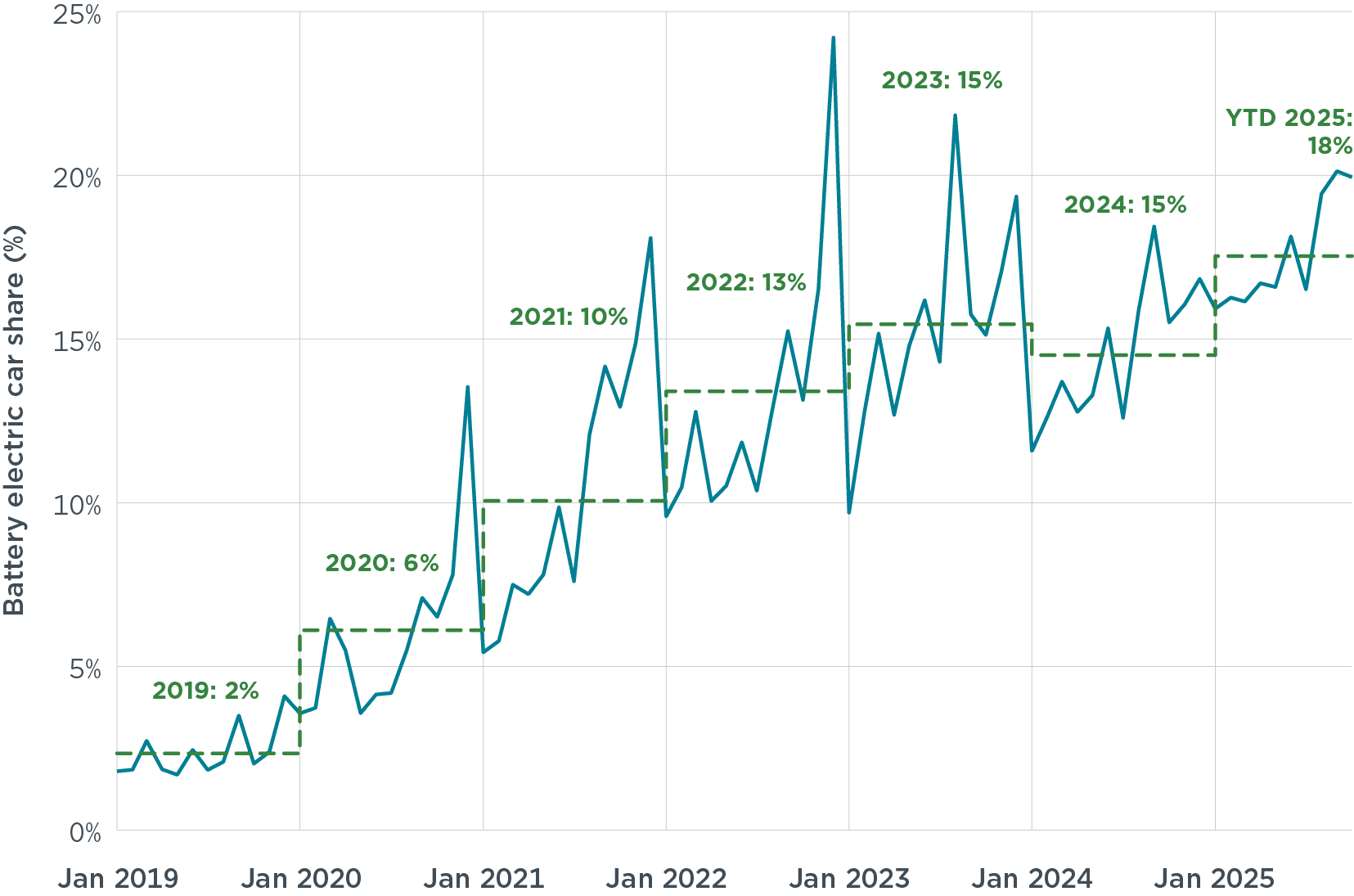
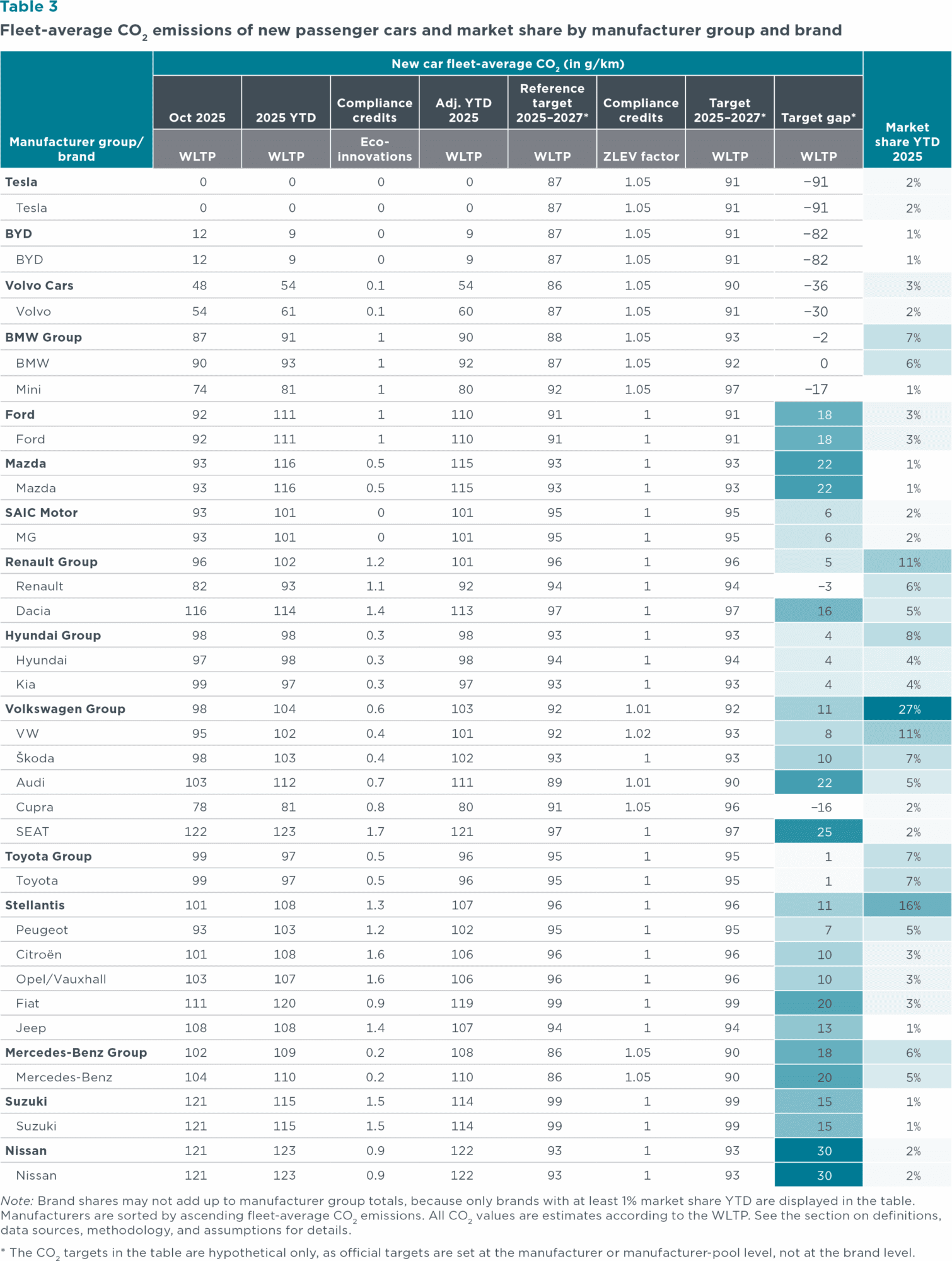
Figure 2. Average CO2 emissions of manufacturer pools and individual manufacturers compared with estimated 2025-2027 targets, 2025 YTD
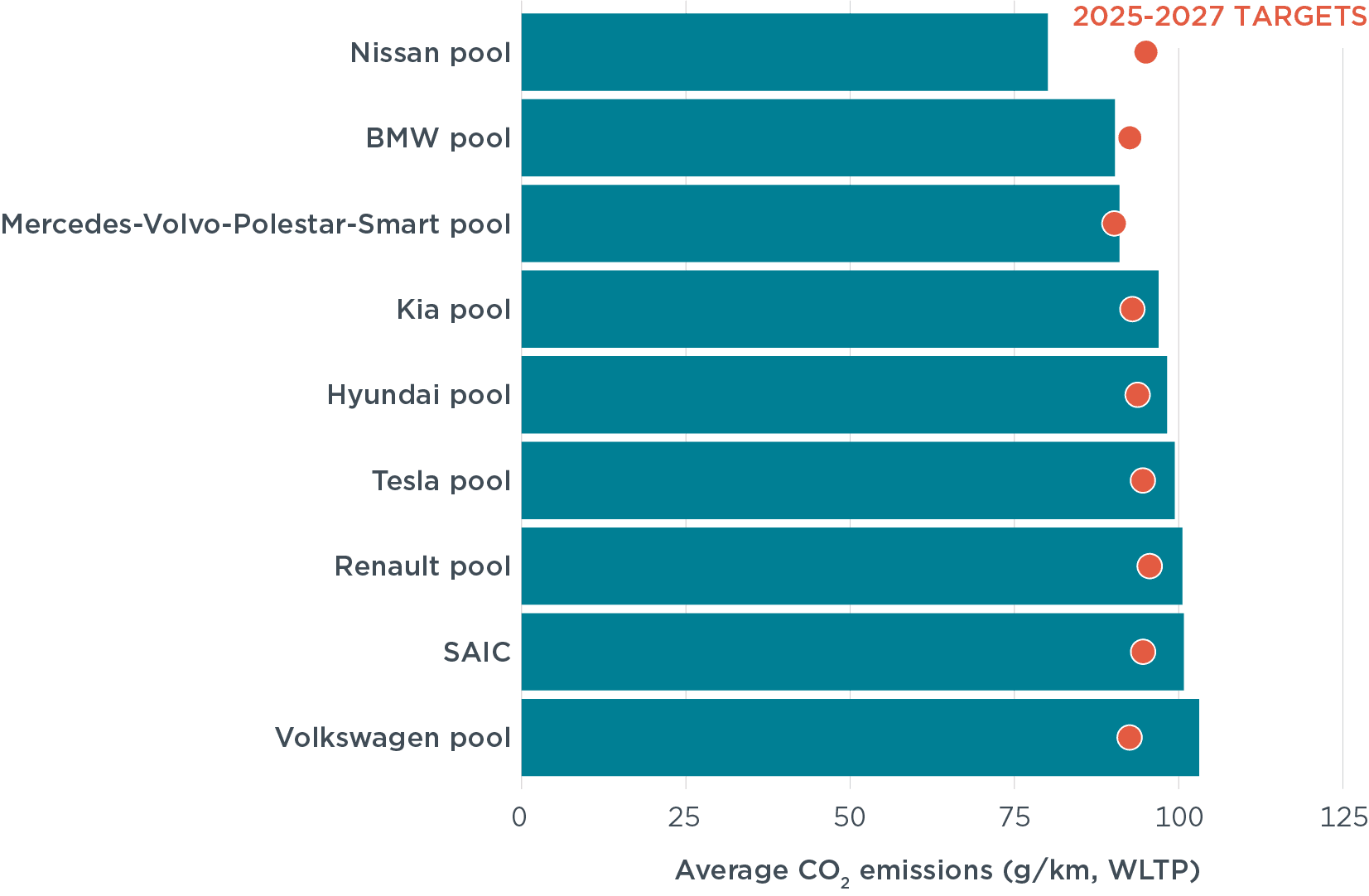
Carbon dioxide (CO2) emissions among manufacturer pools averaged 99 g CO2/km in 2025 YTD. Manufacturing pools thus remain 6 g CO2/km from the average target of 92 g CO2/km for the 2025–2027 period. Compared with the previous month, nearly all of the manufacturer pools reduced their target gap by 1 g CO2/km. The newly formed Nissan pool and the BMW pool are currently in compliance with their 2025–2027 targets (15 and 2 g CO2/km below the target, respectively), while the Mercedes-Volvo-Polestar-Smart pool is 1 g CO2/km short of meeting its target. The Volkswagen pool remains the furthest behind, exceeding its target by 11 g CO2/km.
Looking at individual car brands with market shares of 1% or greater, Tesla and BYD had the greatest over-compliance at 91 and 82 g CO2/km below their projected brand-level average targets for 2025–2027, respectively, followed by Volvo (30 g CO2/km below), Mini (17 g CO2/km below) and Cupra (16 g CO2/km below). Nissan (30 g CO2/km above), SEAT (25 g CO2/km above), Mazda (22 g CO2/km above), and Audi (22 g CO2/km above) currently have the largest target gaps. Mazda reduced its target gap by 3 g CO2/km and Ford and MG reduced their target gaps by 2 g CO2/km each compared with the previous month.
Table 1. Share of battery electric, plug-in hybrid, full hybrid, and mild hybrid passenger cars by manufacturer pool or large manufacturer not forming a pool
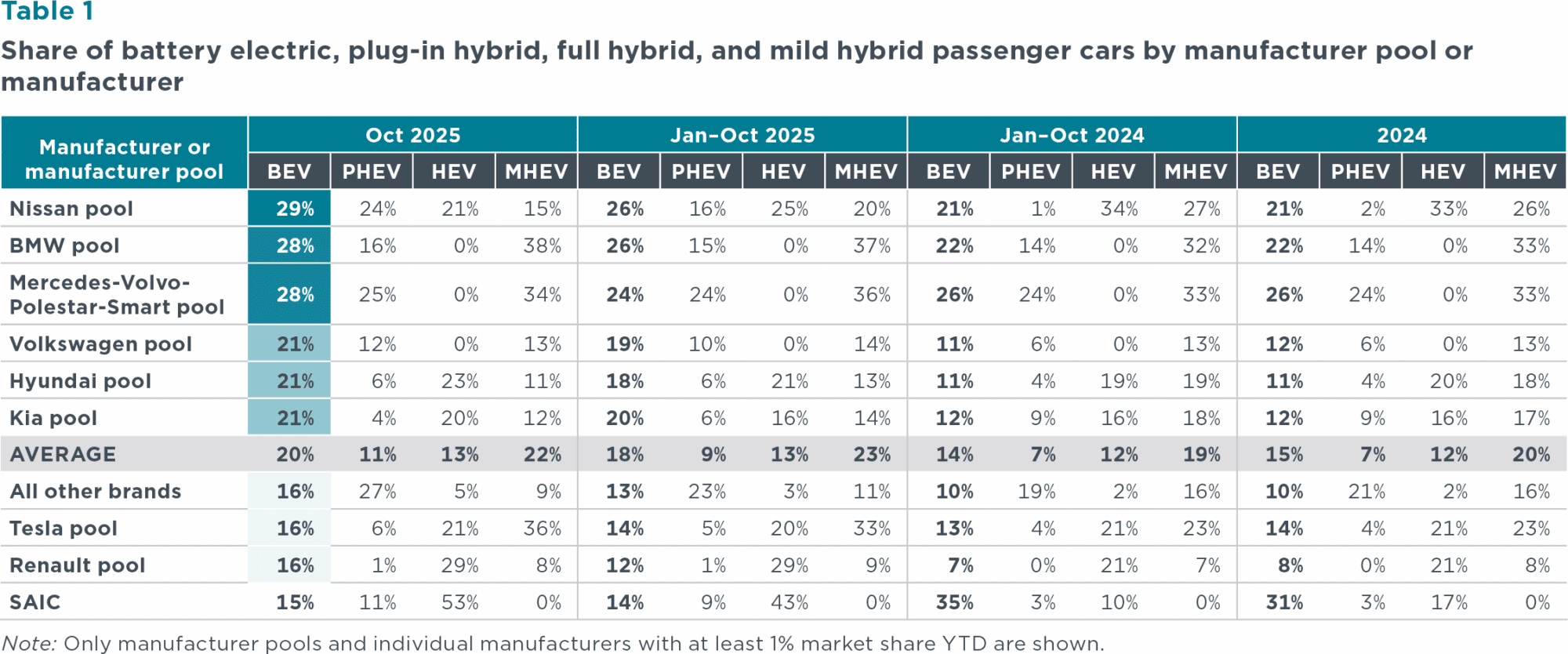
Table 2. Fleet-average CO2 emissions of new passenger cars and market share by manufacturer pool or large manufacturer not forming a pool
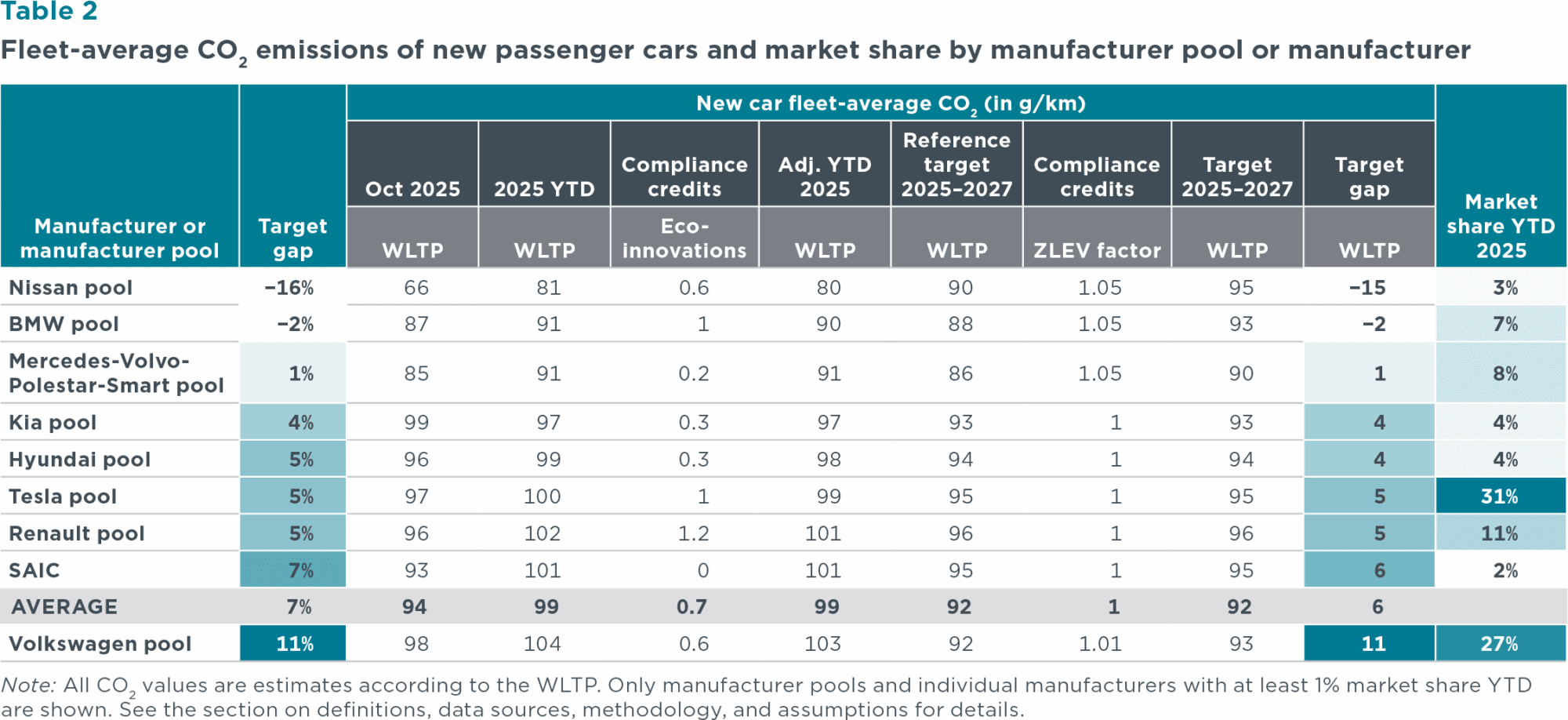
Table 3. Fleet-average CO2 emissions of new passenger cars and market share by manufacturer group and brand
Passenger car registrations by country
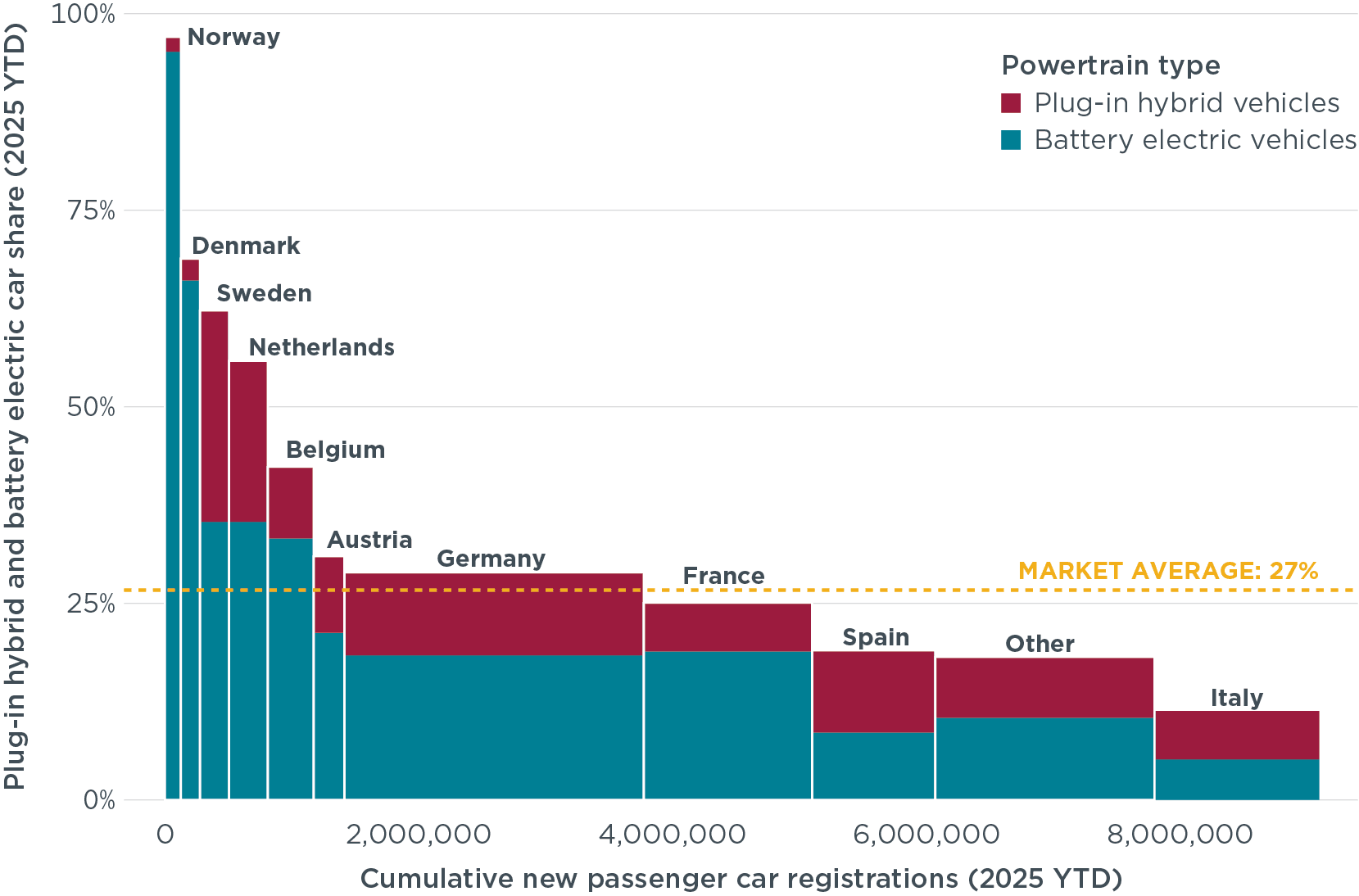
Table 4. New passenger car registrations by country
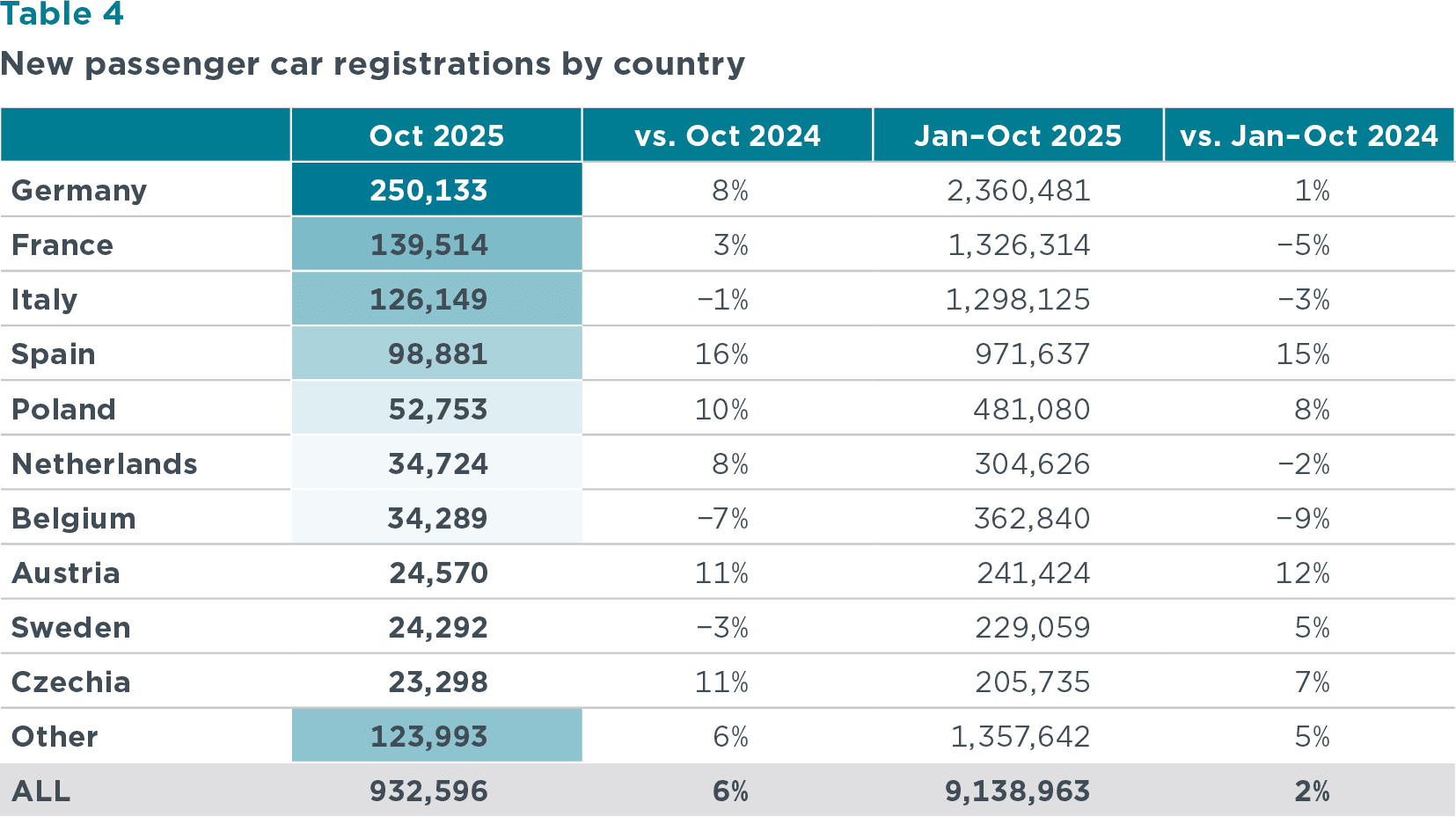
Table 5. New battery electric, plug-in hybrid, hybrid, and mild hybrid passenger car registrations by country
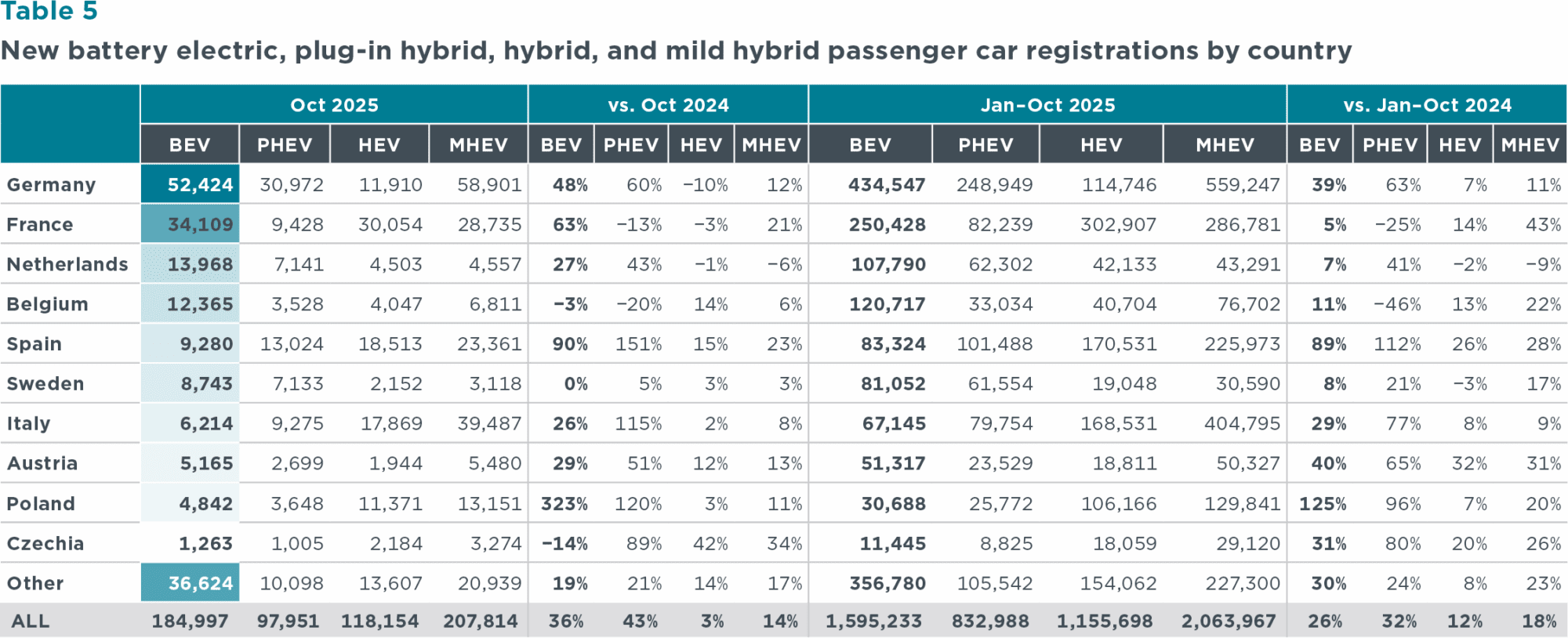
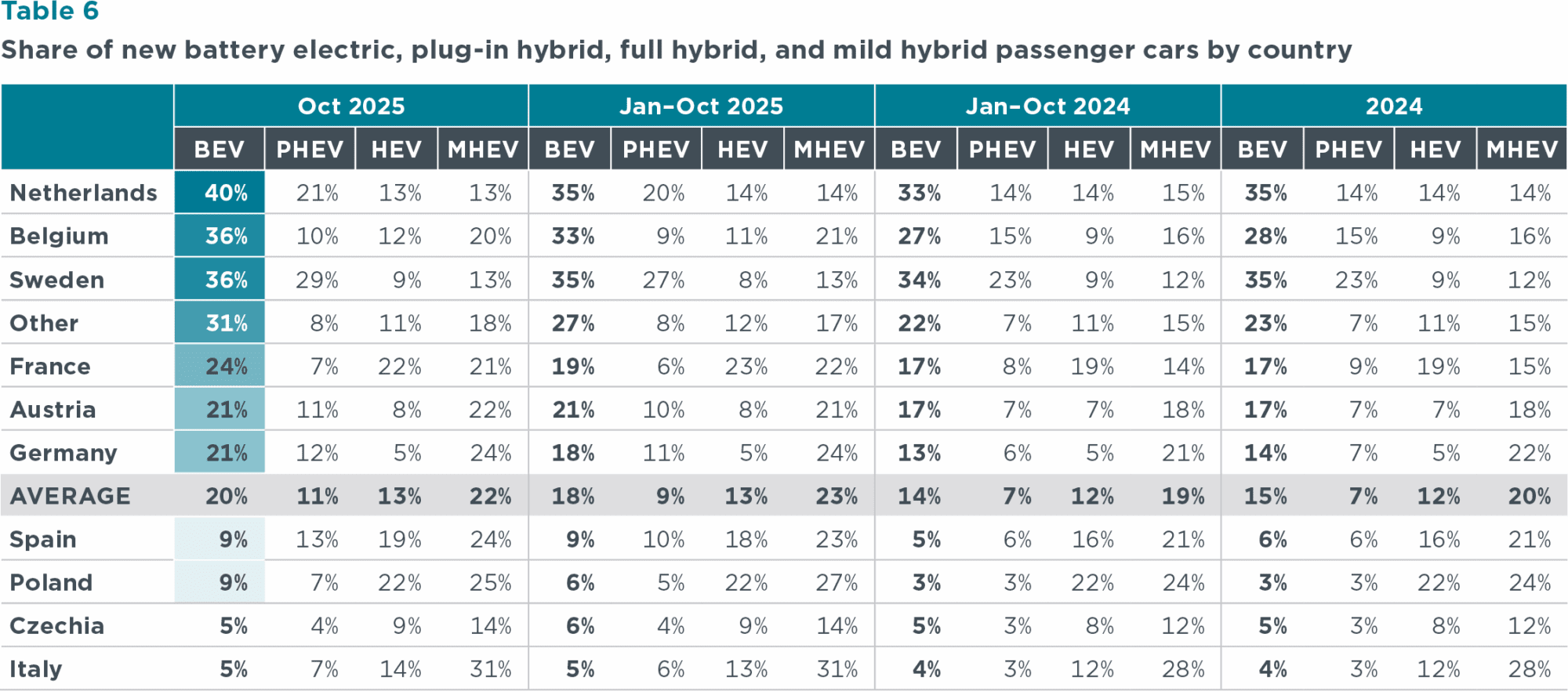
Table 6. Share of new battery electric, plug-in hybrid, full hybrid, and mild hybrid passenger cars by country
Passenger car registrations by owner
Spotlight: Electric vehicle uptake in Poland
Poland, the fifth largest European market by new passenger car registrations, has seen a surge in electric vehicle (EV) uptake in 2025. Year to date, new BEV registrations more than doubled compared with the same period last year. In October 2025, BEVs accounted for 9% of new registrations, a historic high and 7 percentage points above October 2024. Year to date, the BEV market share stood at 6%, up 3 percentage points from the same period in 2024 (Figure 5). Although its BEV share remained below the European average, Poland has now surpassed other major markets—specifically Italy (the third largest) and Czechia (the 10th largest)—since the beginning of 2025.
In February 2025, later updated in October 2025, the Polish government launched “NaszEauto” (“Our E-car”), an incentive program supporting the purchase, rental, and lease of new battery electric cars, vans, and small buses (up to 5 tonnes).1 Applications can be submitted until the end of April 2026 or until the budget of zł 1.18 billion (approximately €0.28 billion) is exhausted. Eligible beneficiaries include private individuals, self-employed individuals, and select local government entities. The base incentive is zł 30,000 (about €7,000), with additional bonuses currently available to holders of the Large Family Card and to applicants who scrap an older internal combustion engine vehicle. In total, the subsidy can be as high as zł 40,000 (about €9,500) per car. In the October revision, the bonus that was previously offered to lower income households was removed.
Since its launch, monthly “NaszEauto” applications have trended upward, reaching a total of about 19,500 submitted applications by the end of October, with 72% for leasing and 28% for direct purchase. Complementing this momentum, a range of national and European programs are supporting the expansion of Poland’s public charging infrastructure, with a particular focus on fast charging stations along the TEN-T network. By October 1, 2025, there were about 6,500 fast public and semi-public chargers installed in Poland, marking an 83% increase compared with October 1, 2024 (Figure 6).
The authors thank Aleksander Rajch from the Polish New Mobility Association (PSNM), who provided key input on policy and market developments in Poland.
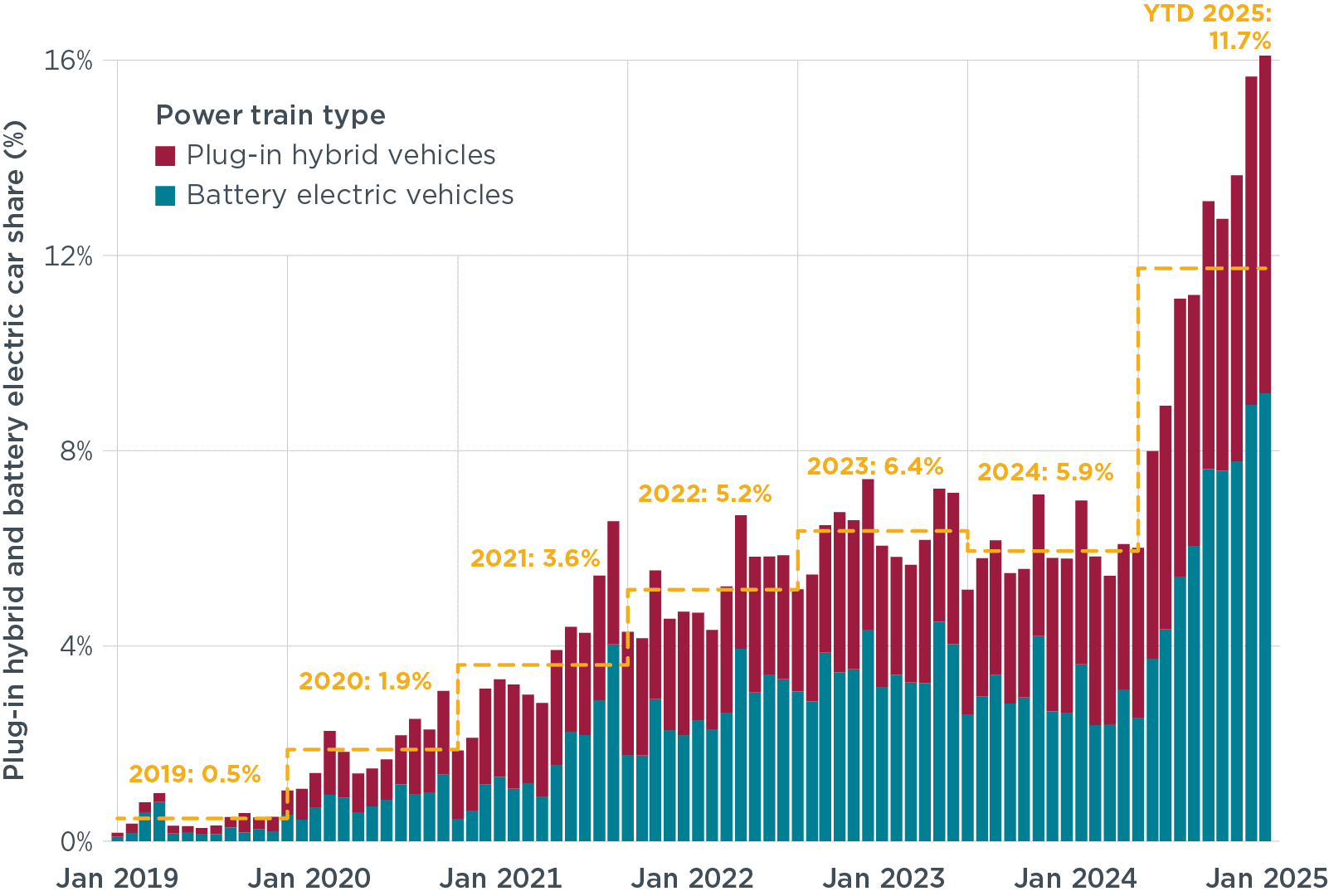
Figure 6. Number of public and semi-public chargers installed in Poland by power output type and power bin
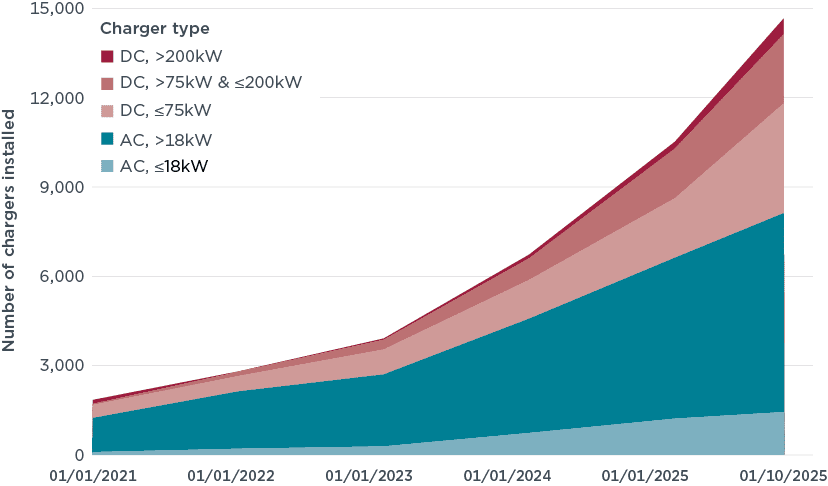
Note: Semi-public chargers are chargers located on private property that typically have access restrictions, such as specific opening and closing times. By comparison, public chargers are accessible to all people 24 hours a day, 7 days a week. AC (alternating current) chargers, often referred to as normal chargers, are slow or semi-fast chargers that deliver up to 50 kW of power in the form of alternating current from the electrical grid. By contrast, DC (direct current) chargers, or fast chargers, supply power directly to the vehicle’s battery, bypassing the onboard converter. These chargers typically supply power of 50 kW or greater, enabling faster charging.
Definitions, data sources, methodology, and assumptions
- Manufacturer pools: Automakers are allowed to form pools to jointly comply with CO2 targets. For this publication, the 2025 pools are defined according to the European Commission’s “M1 pooling list” version from 30 October 2025 as well as the “Declaration of Intent to Form Open Pools” version from 27 October 2025. The 2024 closed pools from the M1 pooling list have been carried over into 2025, even in the absence of a formal declaration in 2025, as they typically remain stable due to ongoing commercial affiliations (e.g., the BMW and Kia pools). By contrast, only open pools that have been confirmed for 2025 are included, because their composition tends to change more frequently than closed pools. Additionally, it is assumed that the Renault Group forms a closed pool in 2025 with its affiliated manufacturers. The main brands are: BMW pool (BMW, Mini), Hyundai pool (Hyundai), Kia pool (Kia), Mercedes-Volvo-Polestar-Smart pool (Mercedes-Benz, Polestar, Smart, Volvo), Nissan pool (BYD, Nissan), Renault pool (Dacia, Renault), Tesla pool (Citroën, Fiat, Ford, Jeep, Mazda, Opel, Peugeot, Suzuki, Tesla, Toyota), and Volkswagen pool (Audi, Cupra, Porsche, SEAT, Škoda, VW). SAIC is a large passenger car manufacturer not part of a pool.
- Abbreviations: CO2 = carbon dioxide; g/km = grams per kilometer; YTD = year-to-date; ZLEV = zero- and low-emission vehicle.
- Technical scope: This publication focuses on new passenger car registrations. Battery electric vehicles (BEVs) are powered exclusively by an electric motor, with no additional source of propulsion. Plug-in hybrid electric vehicles (PHEVs) combine a conventional combustion engine with an electric propulsion system that can be recharged via an external power source. Hybrid electric vehicles here include full hybrid electric vehicles (HEVs) and mild hybrid electric vehicles (MHEVs). HEVs and MHEVs integrate two propulsion systems, usually a combustion engine and an electric propulsion system that cannot be recharged via an external power source. Key differences between HEVs and MHEVs are the system voltage and system power. This enables HEVs to drive using only electric power for limited periods, while the electric propulsion system of MHEVs is typically only capable of assisting the combustion engine. For more on HEVs and MHEVs see: Jan Dornoff et al., Mild-Hybrid Vehicles: A Near Term Technology Trend for CO2 Emissions Reduction (International Council on Clean Transportation, 2022), https://theicct.org/publication/mild-hybrid-emissions-jul22/.
- Geographic scope: The European CO2 regulation for vehicle manufacturers applies to all countries of the European Economic Area (EEA). This includes the 27 Member States of the European Union plus Iceland and Norway but excludes Liechtenstein. Data for new car registrations and shares of EVs in this publication cover all of these countries, with the exception of Liechtenstein and Malta. Data for CO2 emission levels additionally omit Bulgaria, Hungary, Romania, and Slovenia.
- Data sources: Dataforce (new vehicle registrations), Eco-Movement (charging points), and European Environment Agency (vehicle mass and eco-innovation credits). Historical values are regularly updated to reflect the latest data available.
- Results may change over time: Registrations and/or CO2 data may be retrospectively updated by some of the national type-approval authorities.
- Test procedures: CO2 values are provided according to the Worldwide harmonized Light vehicles Test Procedure (WLTP).
- Flexible compliance mechanisms: To facilitate meeting the CO2 targets, manufacturers can make use of a number of compliance mechanisms, including (1) eco-innovation technologies and (2) ZLEV factors. First, manufacturers can reduce their CO2 level by up to 6 g/km by deploying eco-innovation technologies. As a conservative estimate, we applied the 2024 level of eco-innovation CO2 emission reductions per brand. For more on the methodology used, see: Uwe Tietge et al., Overview and Evaluation of Eco-Innovations in European Passenger Car CO2 Standards (International Council on Clean Transportation, 2018), https://theicct.org/publications/eco-innovations-european-passenger-car-co2-standards. Second, if a manufacturer’s ZLEV share exceeds 25% (for cars) or 17% (for vans), its CO2 target is increased by the same number of percentage points, up to a maximum of 5%. This adjustment is referred to as the ZLEV factor, while the target before adjustment is called the manufacturer reference target. The manufacturer target is calculated by multiplying the reference target by the ZLEV factor. ZLEVs include BEVs and vehicles with CO2 emissions of 50 g/km or less (WLTP). For details on the ZLEV factor mechanism, see: Jan Dornoff, CO2 Emission Standards for New Passenger Cars and Vans in the European Union (International Council on Clean Transportation, 2023), https://theicct.org/publication/eu-co2-standards-cars-vans-may23/.
- Mass-based targets: For each manufacturer or manufacturer pool, a specific 2025 CO2 target value applies, depending on the average WLTP test mass of the new vehicles registered. For this publication, we assume the average WLTP test mass per manufacturer pool remains the same as in 2024; the average 2024 BEV and non-BEV test mass for each manufacturer was calculated based on data from the European Environment Agency and then weighted according to their year-to-date 2025 BEV market shares. For more on the methodology used, see: Uwe Tietge et al., CO2 Emissions from New Passenger Cars in Europe: Car Manufacturers’ Performance in 2023 (International Council Clean Transportation, 2024), https://theicct.org/publication/co2-emissions-new-pv-europe-car-manufacturers-performance-2023-sept24/.
- 2025–2027 averaging: Rather than being required to meet the CO2 target applying from 2025 onwards in each individual year, manufacturers were granted the flexibility to comply based on their average CO2 emissions over the three-year period 2025–2027. This means that manufacturers may exceed their CO2 targets in one or more years, provided that any excess emissions are balanced out by equivalent over-compliance in other years within the averaging period. For more details on the provision, see International Council on Clean Transportation, Public Comments on the European Commission Proposal to Introduce a 3-Year “Averaging” Provision for the CO2 Standards Regulation for New Cars and Vans, 2025, https://theicct.org/icct-comments-on-the-european-commission-proposal-to-introduce-a-3-year-averaging-provision-for-the-co2-standards-regulation-for-new-cars-and-vans/.
- Charging point: As defined in the Alternative Fuels Infrastructure Regulation, a charging point “means a fixed or mobile interface that allows for the transfer of electricity to an electric vehicle, which, whilst it may have one or several connectors to accommodate different connector types, is capable of recharging only one electric vehicle at a time, and excludes devices with a power output less than or equal to 3.7 kW the primary purpose of which is not recharging electric vehicles.”6
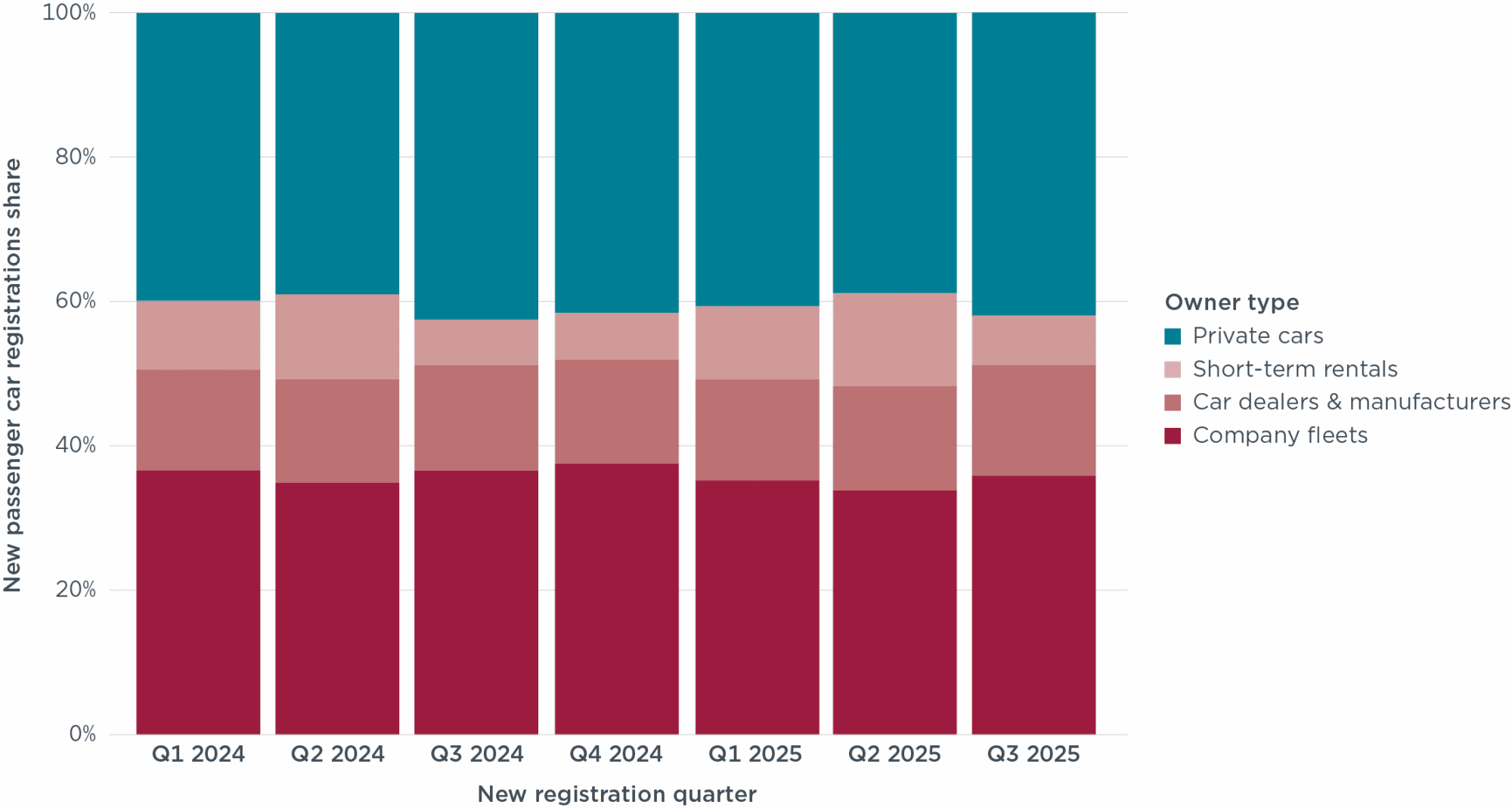
- Owner types: This publication considers four types of owners: private cars, company fleets, short-term rentals, and car dealers and manufacturers. The private car category includes all registrations under private individuals, including those of self-employed persons, provided the vehicles are not registered under a company name. Private leasing is also included. Company fleets encompass all vehicles registered to companies, excluding those intended for resale or rental. This category includes company and public administration fleets, commercial long-term rentals, commercial leases, taxis, driving schools, diplomats, etc. The size of the fleet and the extent to which the vehicles are used privately are not considered relevant. The short-term rentals type covers all registrations under large or small national and local rental companies. It also covers all vehicles flagged by authorities for self-drive rental purposes. The car dealers and manufacturers type includes all vehicles registered by car dealers and manufacturers. For automakers, this includes vehicles used for press purposes as well as those for their employees. New registrations data by owner type are aggregated for the following 19 European countries: Austria, Belgium, Czechia, Denmark, Finland, France, Germany, Iceland, Italy, Latvia, Lithuania, the Netherlands, Norway, Poland, Portugal, Spain, Sweden, Switzerland, and United Kingdom.

This publication is a collaboration between the ICCT, IMT-IDDRI, and ECCO think tank.