Report
European vehicle market statistics 2025/26
The 2025/26 edition of European Vehicle Market Statistics offers a statistical portrait of passenger car, light commercial, and heavy-duty vehicle fleets in the European Union from 2001 to 2024.
The report provides data on new vehicle registrations, technologies, fuel consumption, and emissions, and offers insights on long-term trends of the vehicle market.
Key findings
10.6 million
new cars registered in 2024
48%
of new cars registered in 2024 were SUVs
108 g/km
fleet-average CO2 emissions from new passenger cars
47%
lower CO2 emissions from new passenger cars from 2001 to 2024
of new cars registered in 2024 were battery electric
Number of vehicles
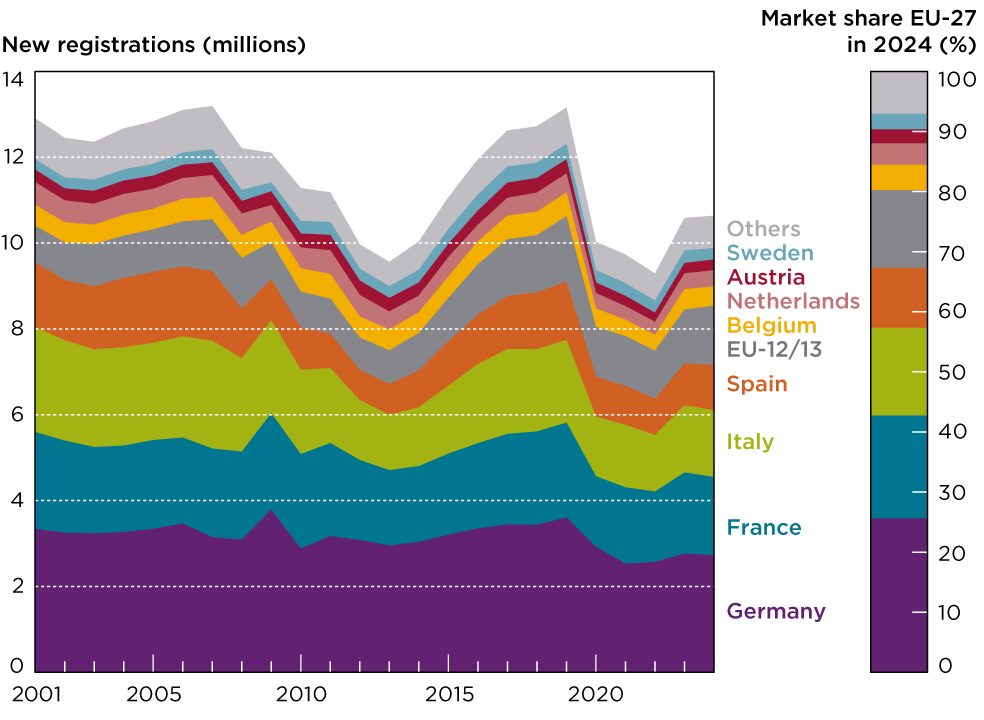
With just over 10.6 million registrations, the number of newly registered passenger cars in the EU remained stable in 2024, following the rebound seen in 2022 and 2023. Spain (+8% compared with 2023) and Austria (+6%) recorded the strongest growth, while Sweden (−9%) and Belgium (−6%) saw the largest declines. Germany remains the EU’s largest vehicle market, accounting for 26 % of all registrations in 2024.
Passenger cars: New registrations by country
SUVs and off-road vehicles remained the leading vehicle segment in 2024 with a 48% market share. However, for only the second time since 2001, registrations in this segment did not increase compared with the previous year. The lower-medium segment ranked second with a 19 % share, followed by the small-car segment at 16%.
Passenger cars: New registrations by vehicle segment


Fuel consumption and tailpipe emissions
New passenger cars registered in the EU in 2024 had average CO2 emissions of just under 108 g/km, unchanged from 2023. Emissions differed significantly across Member States, ranging from nearly 120 g/km in Italy to 62 g/km in Sweden. In Germany, average CO2 emissions rose for the second consecutive year, reaching 117 g/km in 2024—up from 106 g/km in 2022.
Passenger cars: CO2 emissions by country

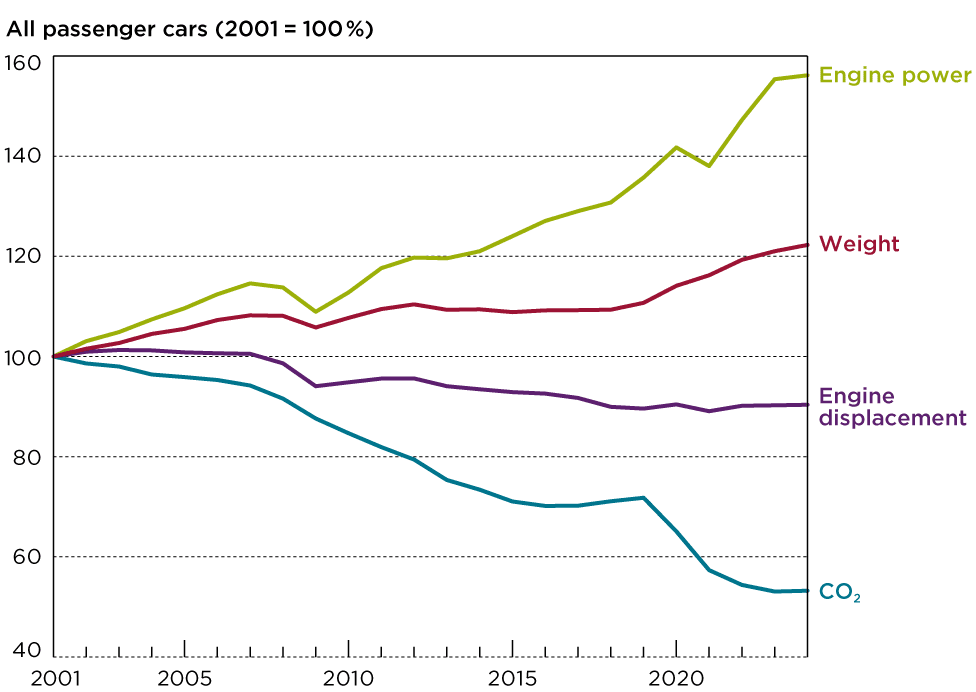
While the average CO2 emissions for new cars in the EU, as assessed by the official test procedure, have decreased by about 47% since 2001, vehicle weight has increased by 22% and engine power has increased by 56%.
Passenger cars: CO2 emissions and technical parameters
Technologies and key technical parameters
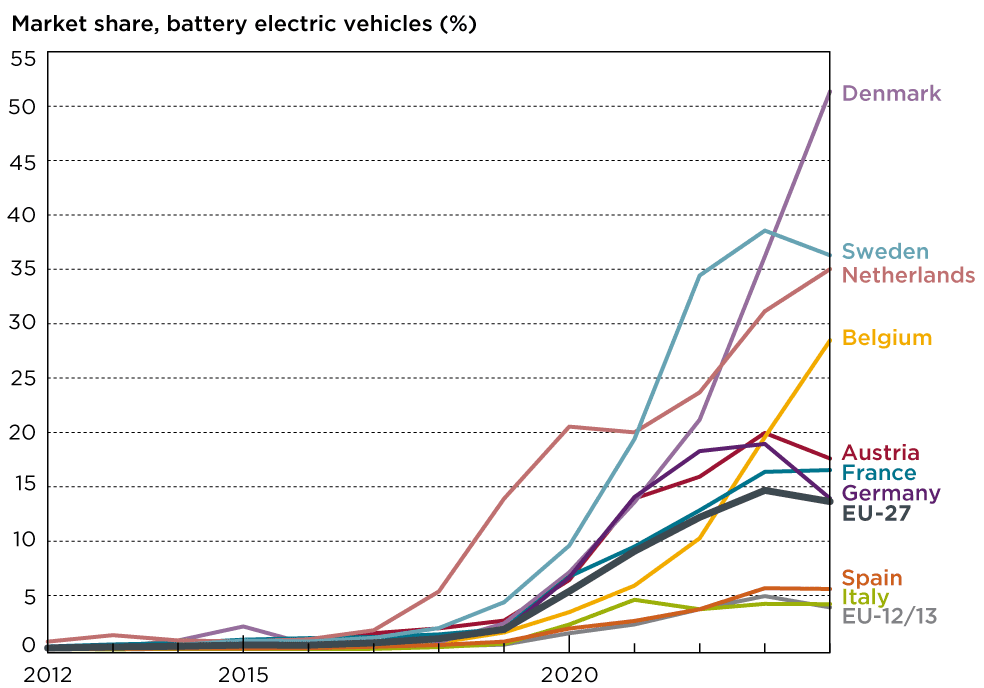
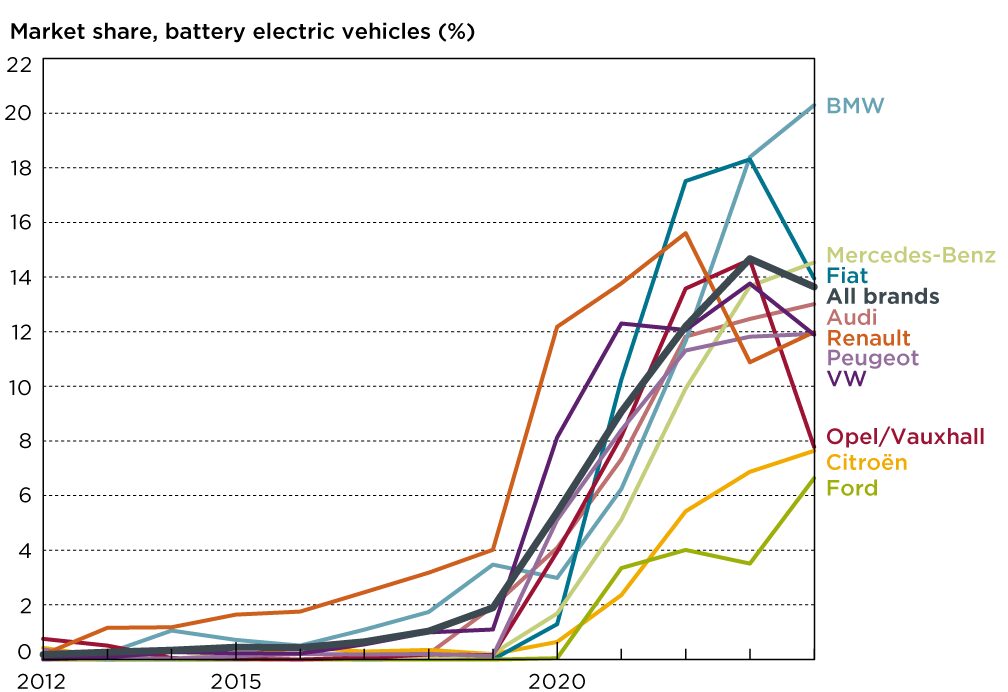
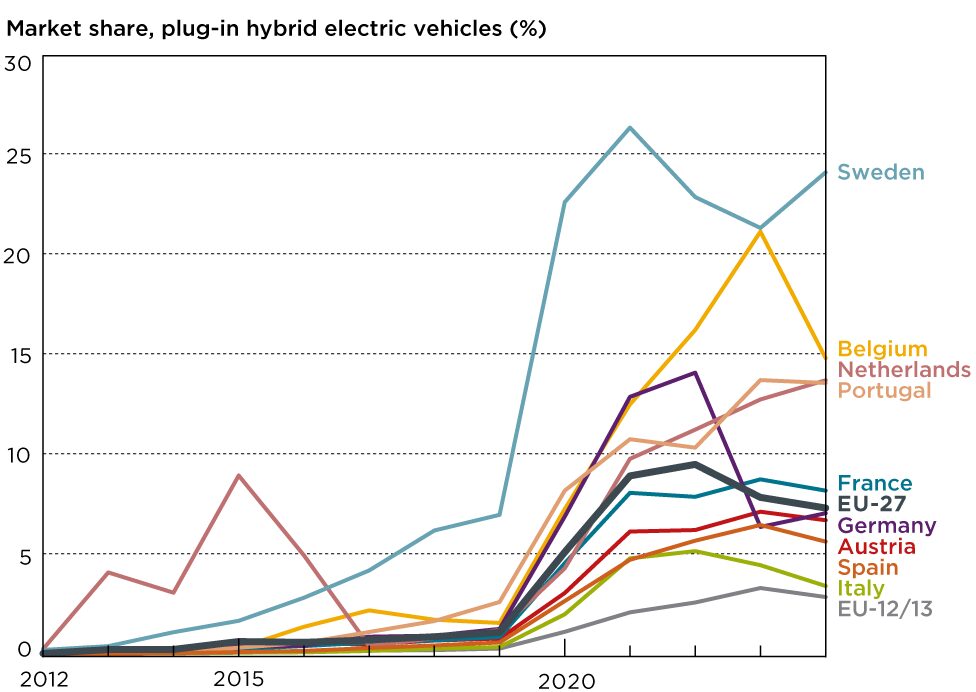
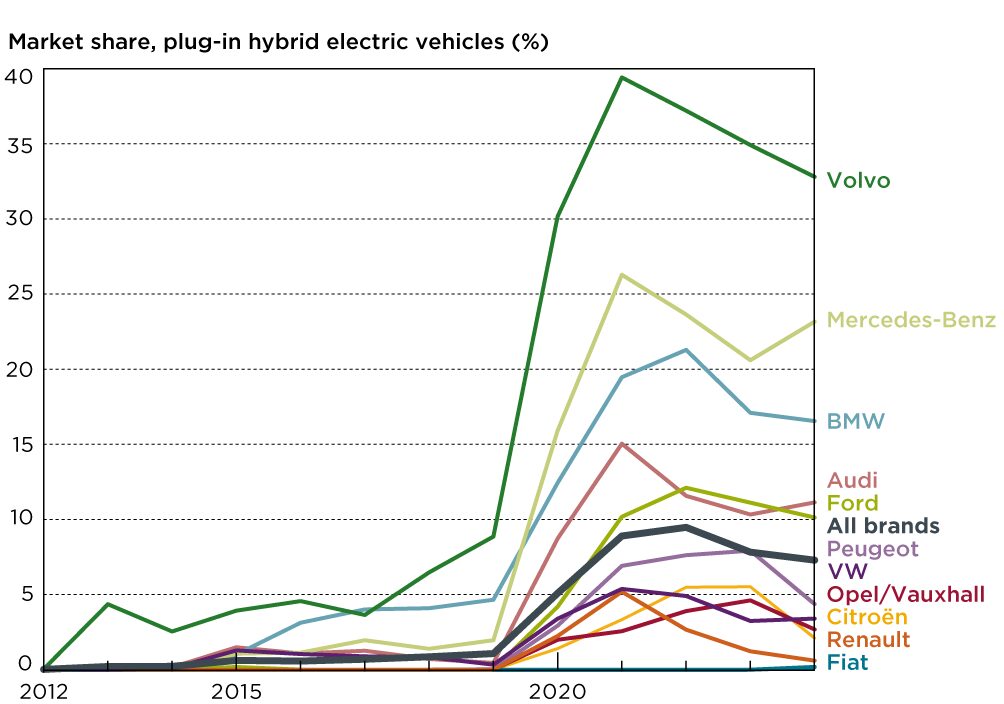
While most newly registered passenger cars in the EU-27 are still powered by gasoline or diesel engines, battery-electric vehicles (BEVs) made up nearly 14% of new registrations in 2024, and plug-in hybrid electric vehicles (PHEVs) accounted for about 7%.
PHEV uptake varied widely by country, with particularly high shares in Sweden, Belgium, the Netherlands, and Portugal. Among manufacturers, Volvo continued to lead in PHEV penetration, with PHEVs making up 33% of its 2024 registrations.
The BEV share continued to grow in Denmark (51%), the Netherlands (35%), and Belgium (29%), and remained high in Sweden (36%) despite a slight year-on-year decline. Among major manufacturers, BMW had the highest BEV share in 2024, with BEVs representing 20% of its new registrations.
Spotlight: Energy consumption by powertrain